A Guide to BREEAM – Part 2

In Part 1 of this guide, Architect Rebecca Smith, discussed what BREEAM is, the type of developments it applies to, how a BREEAM rating is achieved and the key areas of assessment as part of the process.
In Part 2 of this guide, we take a look and how BREEAM might affect your project, when it is required, the benefits it can bring and how WDA can support you…
BREEAM can be relevant to a wide range of development types, including commercial, industrial, retail, education, healthcare and leisure projects. This is not just for new construction, but also includes refurbishment and fit-out of existing commercial buildings.
Will my project need BREEAM?
Not necessarily. Whether BREEAM is required will depend on a number of factors, including the location, type and scale of the development and, importantly, the relevant Local Planning Authority’s planning policies.
BREEAM requirements are not identical across the country. Individual local authorities can set their own planning requirements and thresholds through their Local Plans and other planning policies. Some authorities may require BREEAM for non-residential developments above a specified floor area, while others may apply a requirement more broadly to commercial development.
It is therefore important to establish whether BREEAM is required at the earliest stage of a project. Even where it is not a planning requirement, you may still choose to pursue BREEAM to meet sustainability, investment or corporate objectives.
Consider a pre-application enquiry
Where there is any uncertainty about whether a project will trigger a BREEAM requirement, it is always advisable to undertake a pre-application enquiry with the relevant Local Planning Authority.
A pre-application enquiry provides an opportunity to discuss the proposed development with the planning authority at an early stage and establish how its adopted planning policies are likely to apply to the specific project. In particular, it can help clarify whether the authority is likely to seek a BREEAM planning condition, and whether a particular target rating or supporting sustainability information is likely to be expected.
While pre-application advice cannot guarantee the outcome of a future planning application, it can provide valuable clarity before significant time and cost is committed to the design. Planning conditions may be attached to a planning permission where considered necessary, and applicants should understand potential conditions as early as possible in the process.
Our advice: if BREEAM may be relevant to your project, establish the requirement and target rating as early as possible – ideally during the feasibility or pre-application stage. This allows sustainability objectives to be properly integrated into the design rather than being addressed retrospectively.
Early consideration is particularly important because many BREEAM credits influence fundamental design decisions. Trying to achieve a particular rating late in the design process can result in missed opportunities, additional costs or the need to revisit elements of the scheme.

What are the benefits of BREEAM?
BREEAM can offer benefits well beyond simply satisfying a planning requirement.
Improved sustainability
BREEAM encourages measures that can reduce energy consumption, carbon emissions, water use, waste and the wider environmental impact of a building. The latest standards place increasing emphasis on whole-life carbon, resilience, biodiversity and the long-term performance of buildings.
Future-proofing
Buildings designed with sustainability, resilience and changing environmental standards in mind are better positioned to respond to future regulatory, market and occupier expectations.
Lower running costs
Energy-efficient systems, effective water management and considered building design can help reduce operational energy and running costs over the lifetime of the building.
Enhanced reputation and asset value
An independently assessed BREEAM rating provides tangible evidence of a project’s sustainability credentials. This can support environmental, social and governance objectives and make buildings more attractive to investors, occupiers and tenants. BREEAM also provides independent third-party assurance of a building’s sustainability performance.
Better spaces for people
BREEAM places significant emphasis on health and wellbeing, encouraging design decisions that can improve daylight, air quality, thermal comfort, acoustics and the overall quality of the internal environment.
A collaborative process
BREEAM encourages early collaboration between the you the client, architect, consultants, contractor and specialist advisers. Establishing clear sustainability objectives at the outset helps the wider project team understand their responsibilities and provides a structured route towards achieving the desired outcome.

How can we support you?
BREEAM can involve a number of different specialists, technical requirements and evidence submissions. Our role is to help you navigate this process and ensure that BREEAM is considered as an integral part of the project, rather than as an additional requirement at the end of the design process.
We can support you from the earliest feasibility and pre-application stages, helping to identify whether BREEAM is likely to be required and advising on the implications for the proposed development. Where appropriate, we can assist in identifying the information needed for a pre-application enquiry and help establish a realistic BREEAM target for the project.
Once a BREEAM requirement has been established, we can work with the wider design team and BREEAM specialists to embed the required measures into the design from the outset. This can include coordinating the requirements with structural engineers, building services engineers, landscape consultants, ecologists, energy and sustainability specialists and other members of the project team.
Our experience covers both new construction and refurbishment and fit-out projects, supporting schemes through the various stages of design and development and helping to ensure that the BREEAM strategy remains aligned with the evolving project.
As the project progresses, we can help coordinate BREEAM requirements across the design and construction teams, identify potential issues early and ensure that responsibilities for providing information and evidence are clearly understood.
We work closely with appointed BREEAM Assessors and other specialists through to construction and handover, helping to coordinate the information required to demonstrate that the sustainability objectives established at the outset have been delivered.
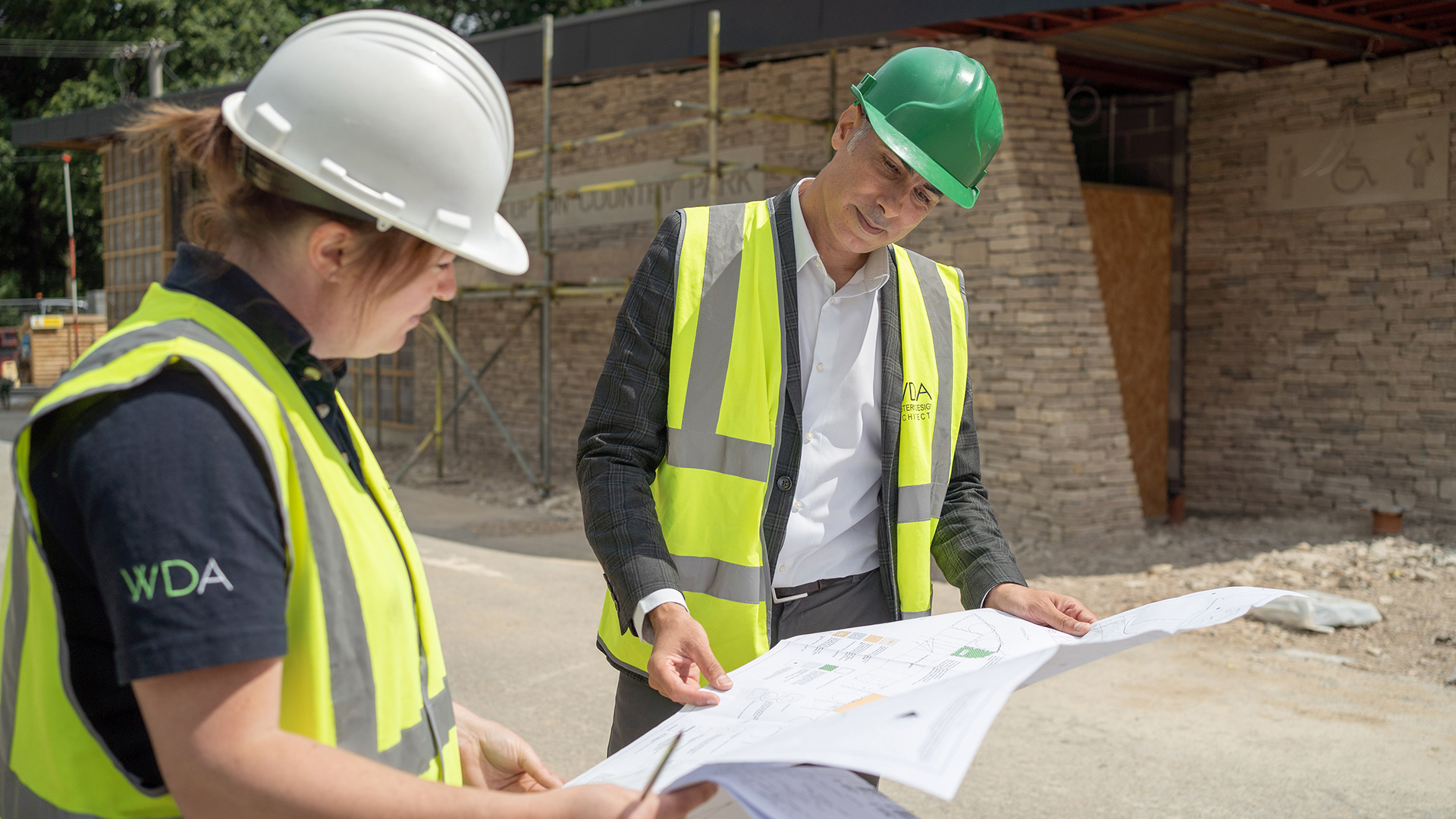
From planning to completion
Our approach is to provide a coordinated service throughout the project, helping you to:
- Establish whether BREEAM is required and understand the relevant planning requirements.
- Support early discussions with the Local Planning Authority where appropriate.
- Work with an assessor to identify an achievable BREEAM target and assessment route.
- Integrate BREEAM requirements into the design.
- Coordinate with BREEAM Assessors and specialist consultants.
- Identify potential issues or missed credits at an early stage.
- Support the design and construction teams in meeting agreed requirements.
- Coordinate the information and evidence required through construction.
- Assist with the process through to completion
By engaging with BREEAM at the earliest stage, we can help ensure that sustainability is integrated into the design from the outset – supporting a smoother planning and delivery process while helping you achieve a high-performing, future-ready building.
Published 05 October 2026